While demand for sustainable solutions keeps growing, there’s still a clear gap between performance and potential across Europe in the circular tech industry. Attach rates for trade-ins in Europe are significantly behind in comparison to the more mature US and Asian markets. However, the same gap also represents an opportunity: to build smarter, more efficient, and value-driven circular systems from the ground up.
At one of Estonia’s most established business forums, the 20th Kite Flight conference (Tuulelohe lend), the topic of added value reflected clearly in the broader cross-industry discussions. Whether active in Europe or on a global scale, companies across sectors have this goal in common when building their strategies for rising to the top economic leagues.
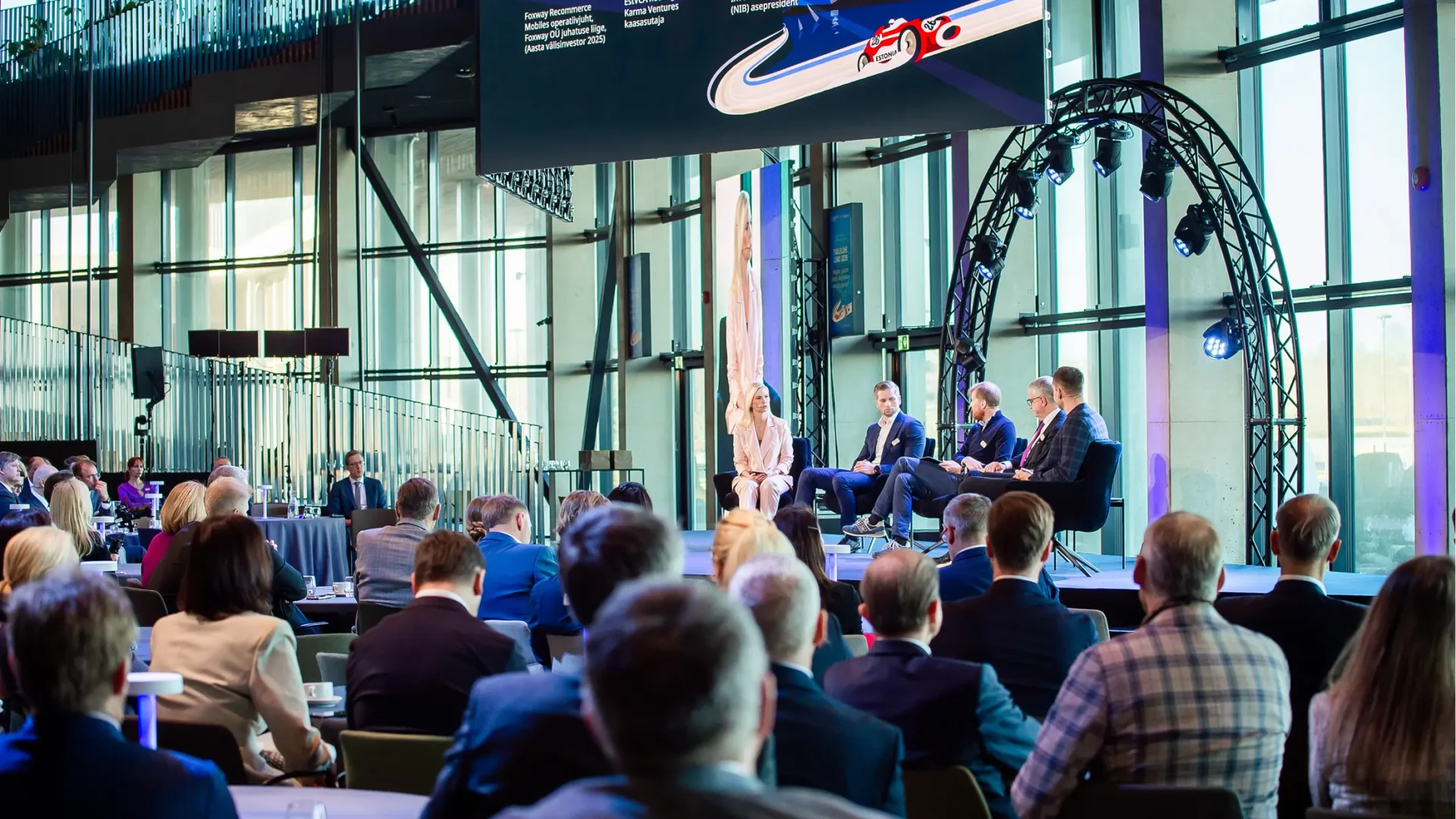
In one of the panel sessions, Oliver Kotkas (VP of Operations at Foxway Recommerce Mobiles), Margus Uudam (Member of the Board of EstVCA and co-founder of Karma Ventures), Gunnar Okk (Vice President of the Nordic Investment Bank), and Markus Villig (Founder and CEO of Bolt) discussed how to strengthen economic competitiveness: from investment attractiveness to leveraging market dynamics. Building on the panel discussion, we cover the key perspectives from Foxway’s point of view.
The economics of circularity depend on value per device
In circular tech, moving volumes alone is not a differentiator. What matters is how much value can be recovered from each device. This is especially relevant as a large share of devices in their first use cycle are not immediately ready for direct reuse.
At Foxway’s tech center in Tartu, around half of incoming devices need some form of value-uplift. Turning these into high-quality products requires strong technical capabilities, structured processes, and continuous investments into R&D.
“About half of our incoming devices move through automated workflows that allow us to move large volumes fast. The other half requires targeted repair and refurbishment. Years of in-house value-add experience have built a strong foundation for Foxway that allows us to create maximum value while maintaining economic discipline.”
Oliver Kotkas, VP of Operations at Foxway Recommerce Mobiles
Growth driven purely by increasing volumes is limited. Competitiveness comes from improving outcomes per device: extracting more value, extending lifecycles, and — through that competence — raising residual values.
AI enables smarter, data-driven value creation
Maximizing value at scale requires precision and knowing what each device needs to meet market expectations. This is where AI becomes a key enabler.
“AI can help us achieve a whole other level in the way we handle data. This goes beyond process optimization. With the right insight, such knowledge will have direct impact on commercial outcomes and ultimately determine the winners in the industry.”
Oliver Kotkas, VP of Operations at Foxway Recommerce Mobiles
By integrating AI into the beginning of the second-life journey, Foxway can determine the optimal pathway for each device. AI-powered visual and functional grading in solutions like the Foxway Circular Platform enable insights that allow to find the best fit between value-add and customer segments. For our partners, this in turn means more predictable outcomes, clearer pricing, and a more efficient way to manage trade-ins across markets.
Market leaders will combine value, scale, and speed
Today, being the best in the recommerce industry comes down to seamless buyback solutions, tools that bring discrepancies in grading to a minimum, and allow devices to move fast and in volumes.
“The companies that can bring the most effective solutions to the market first and succeed in scaling them across Europe will win.”
Oliver Kotkas, VP of Operations at Foxway Recommerce Mobiles
Keeping up with the pace of technological development is critical. The European market is more than ready for a breakthrough. Those who succeed in keeping added value and scale with speed will come out ahead, while others will likely fade from competition.
Recommerce