What does it take to give 100,000 devices the attention of one? To make the circular tech industry grow, detail and volume must be achievable together. That’s exactly how we’ve designed our operations at Foxway, leaving no room for trade-offs in quality as volumes grow.
Every smartphone that enters our facilities is handled individually in a combination of automated workflows and skilled refurbishment by in-house experts. Whether we process 100 devices or hundreds of thousands, each device gets treated to the same standard.
In this article we’ll take you behind the scenes of three automated workflows: charging, testing, and warehousing.
Smart charging keeps every device on track
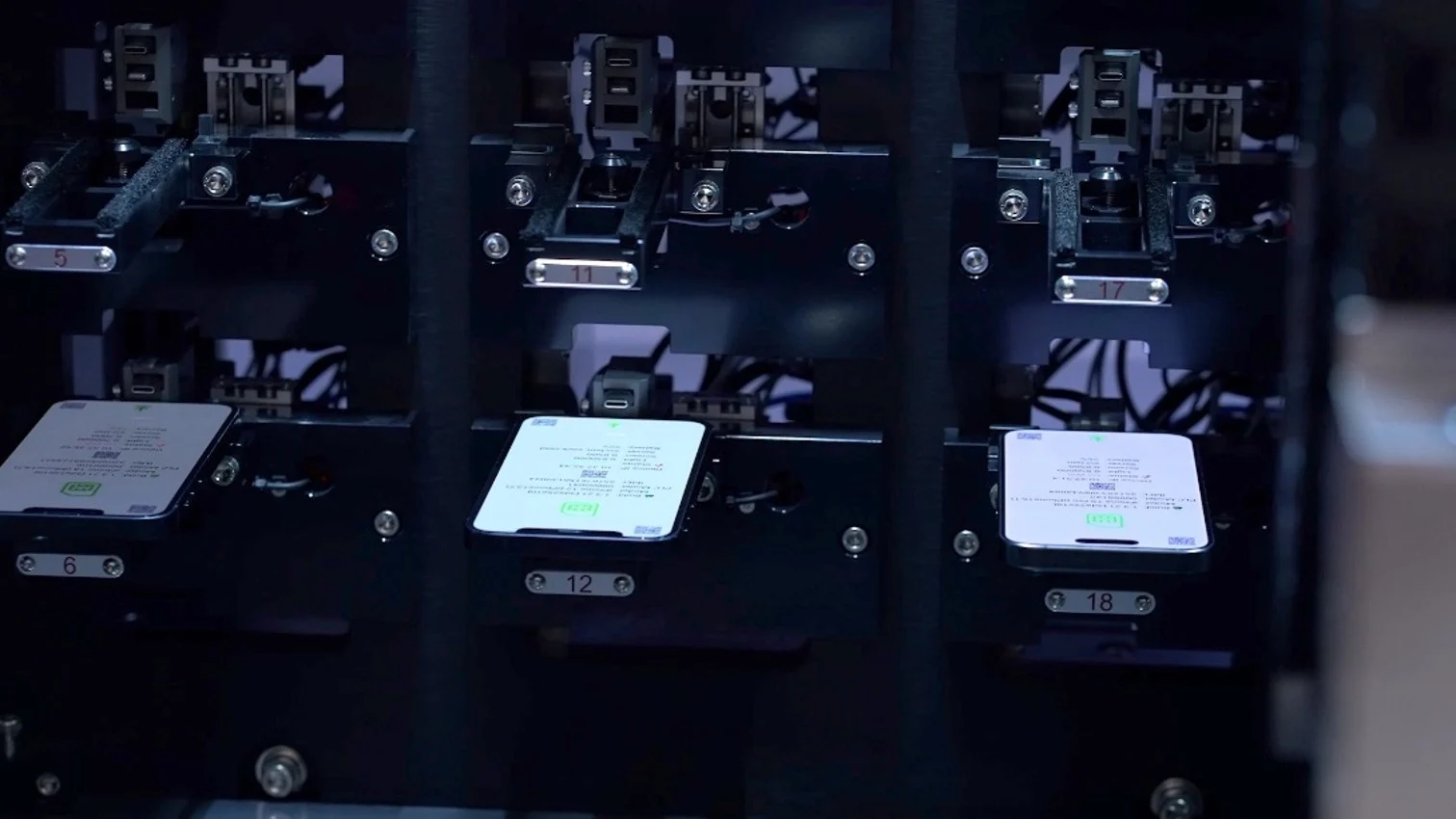
In linear production, a smartphone leaves the factory fully charged. In circular tech, devices arrive with whatever charge the previous user left them, often just enough to complete a factory reset. A device that shuts down mid-process means delays and repeated work. That’s why charging is a vital step before devices enter any other flow.
Our automated charging system identifies each device, selects the right port, and retrieves it as soon as it’s ready, with capacity for nearly 400 devices at a time. The result is individual attention for every device, and optimal processing time spent in the station.
Automated testing built to meet Foxway’s quality standards
Every day, thousands of smartphones pass through Foxway’s operations. Every smartphone is different, yet they deserve to be assessed by the same standard, regardless of brand or model.
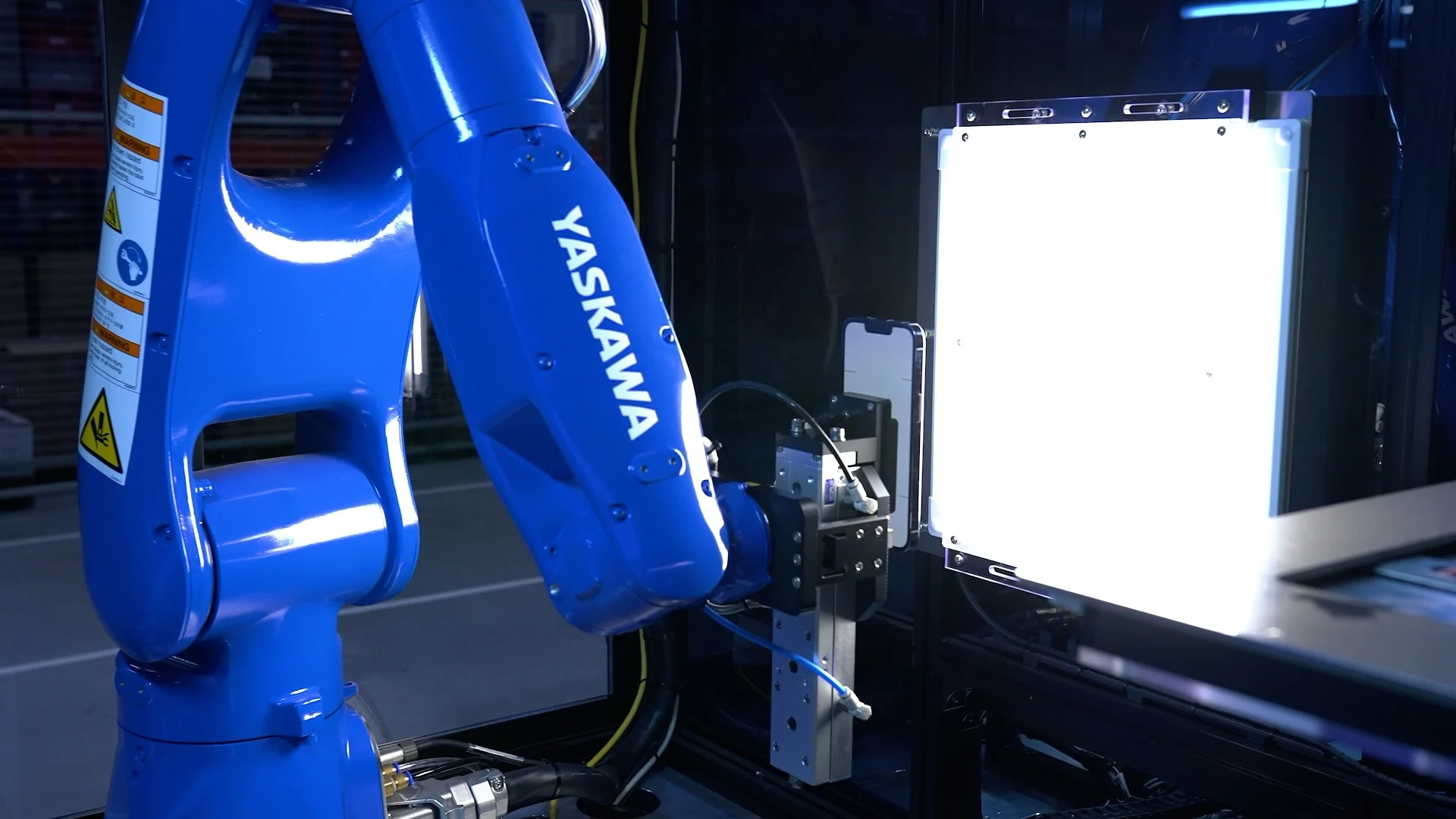
Our automated testing line, powered by Apkudo, runs over 100 individual pass/fail checks, thresholds and sub-measurements per device. With every device, we check everything from the visual condition, display quality and functionality to cameras and buttons, even microphone and speaker testing inside a soundproof chamber.
Combined with Foxway’s proprietary software and grading framework, it gives mobile network operators, retailers, B2B traders, and D2C platforms across Europe a consistency in quality assessment they can rely on, at any volume.
Automated storage and retrieval, ready on demand
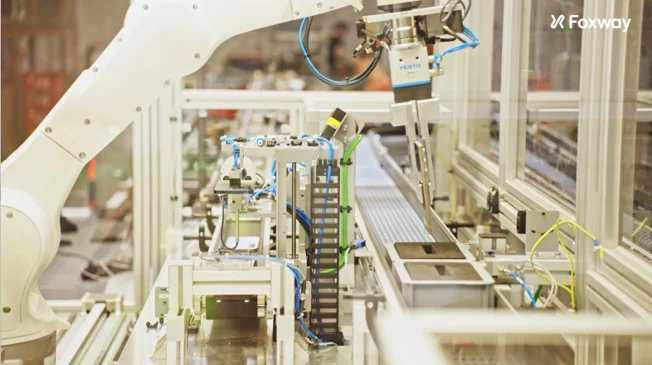
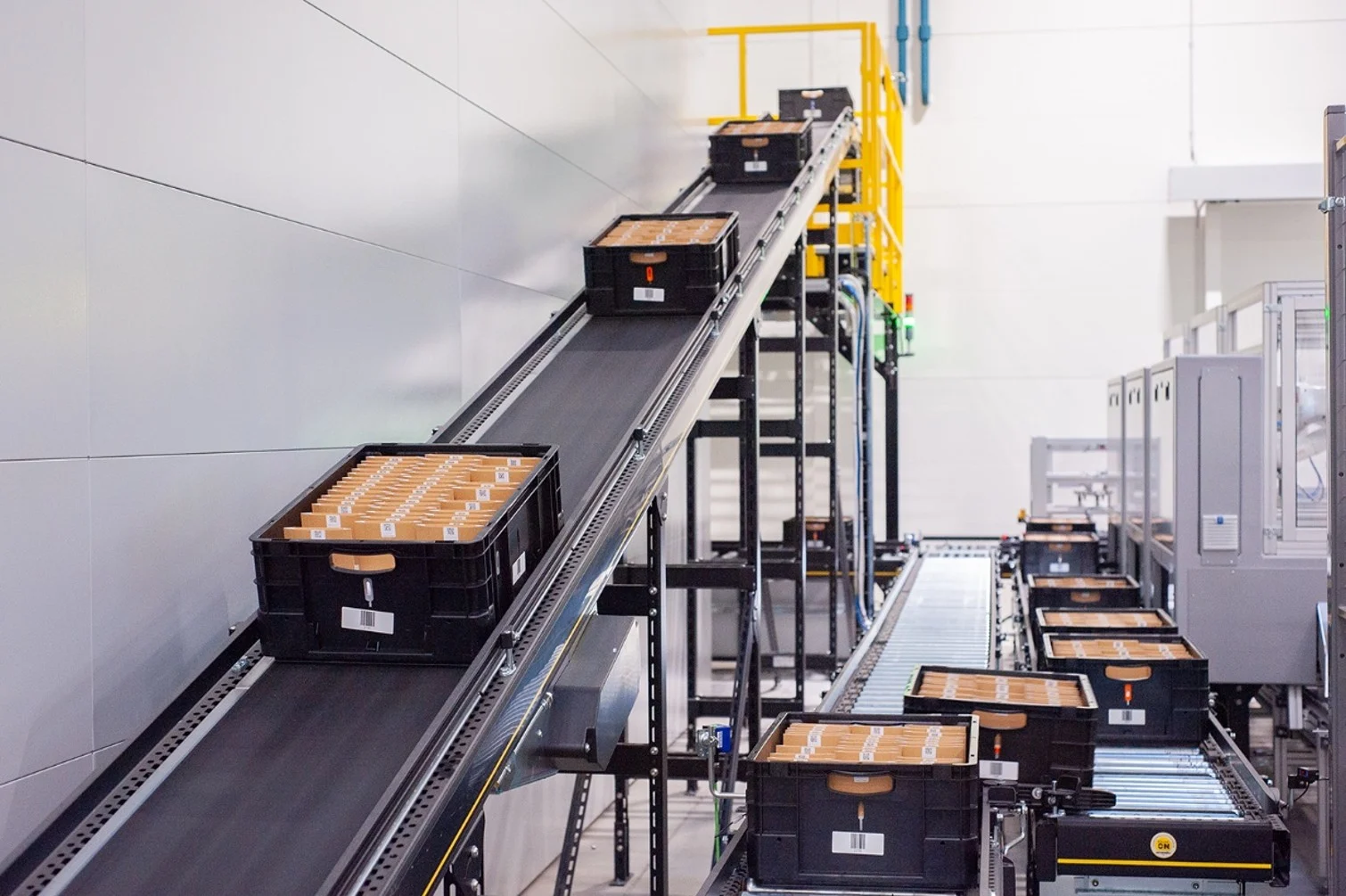
Once a device has been processed and is ready for its next owner, it moves into our automated storage and retrieval system. Most warehouses are built to move boxes, ours is built for individual devices.
The system knows the exact location of every device and retrieves it on demand. For us it means faster processing, fewer errors, and the flexibility to fulfill multiple customer orders in parallel. At the same time, our resale customers can hand-pick exact models and conditions individually.
Each item carries a QR code that links to its origin, processing journey, and once it is retrieved for a customer, also to the resale market. The result is an end-to-end data trail from Europe, to Europe.
Automation that supports the full partner journey
Each of these workflows adds value on its own. Together, they give Foxway’s end-to-end partner capability what it needs to grow: consistent quality, full traceability, and the capacity to scale. Whether partners are starting with a pilot batch or scaling across markets, the standard stays the same.
“Having built custom automations means Foxway is never limited to ‘good enough’. Every device we process teaches us something, and that data flows back into how we test, grade, and handle the next one. For our partners, it means the standard they rely on keeps rising as we grow in business together.”
Rohit Sodha, President of Recommerce Mobiles at Foxway
So what does it take to give 100,000 devices the attention of one? For Foxway, it’s custom-built automation, in-house experts, and processes that continuously push us toward improving our own standards. That’s how we keep more devices in circulation for longer, at whatever scale the circular tech market needs.
Uncategorized